A field guide for curious developers
Less scrolling.
More understanding.
Go beyond the answer. Explore practical guides, build real projects, and make the next concept click.
Build a Django Task Tracker, Part 4: Deploy with Gunicorn and Caddy
Move from a development server to an HTTPS deployment with environment settings, systemd, and operational checks.
Read the guideBuild a Django Task Tracker, Part 3: Test Permissions and Failure Cases
Test ownership, validation, pagination, template escaping, and CSRF with Django’s test client.
Read the guideBuild a Django Task Tracker, Part 2: Forms, Login and Ownership
Build a private task list with validated forms, owner-scoped queries, and CSRF-protected completion.
Read the guideThe reading room
More to discover
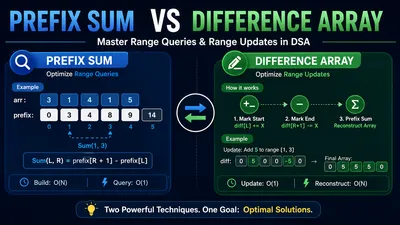
Prefix Sum vs Difference Array: Master Range Queries and Range Updates in DSA
Struggling with Time Limit Exceeded (TLE) errors in array problems? Learn how Prefix Sums and Difference Arrays transform expensive O(N×Q) solutions into efficient O(N+Q) algorithms. This guide covers the intuition, formulas, Python implementations, complexity analysis, and interview tips you need to master both techniques.
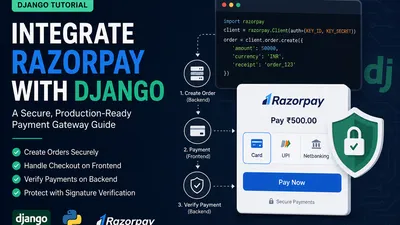
Razorpay Django Integration: Secure Payment Gateway with Signature Verification
A Django and Razorpay integration outline covering server-created orders, saved-order signature checks, capture status, and webhook reconciliation.
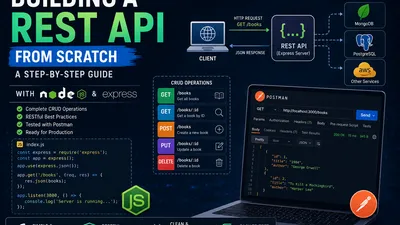
Building a REST API from Scratch: A Step-by-Step Guide
Learn how to build a REST API from scratch using Node.js and Express.js. This beginner-friendly guide walks through creating a complete CRUD API, handling HTTP requests, testing with Postman, and preparing your application for production with best practices.
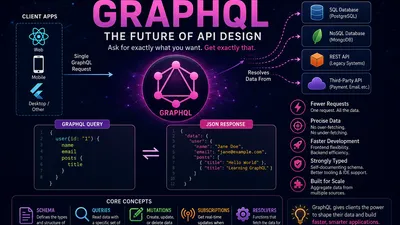
Introduction to GraphQL: The Future of API Design
GraphQL is revolutionizing API design by allowing clients to request exactly the data they need in a single query. Learn how GraphQL solves REST's over-fetching and under-fetching problems, understand its core concepts like schemas, queries, mutations, and resolvers, and discover when it's the right choice for modern web and mobile applications.
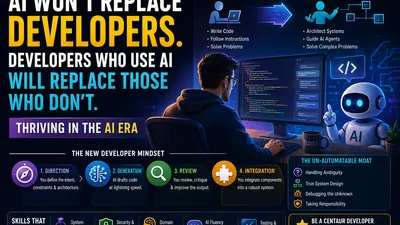
AI Won't Replace Software Developers — Developers Who Use AI Will (The 2026 Reality)
AI isn't replacing software developers—it's transforming the role. Learn why architecture, system design, and AI collaboration are the skills that will define successful engineers in 2026.
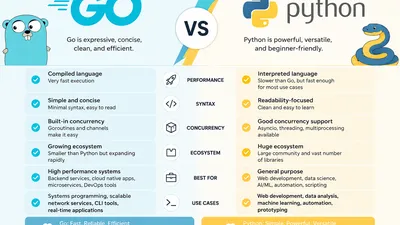
Go (Golang) VS Python for full-stack development
Choosing between Go (Golang) and Python for full-stack development involves a trade-off between performance and scalability (Go) versus speed of development and ecosystem richness (Python). While neither language is traditionally associated with frontend web development (that remains the domain of JavaScript/TypeScript), both have mature backends and unique approaches to handling the frontend. Here is a comprehensive breakdown of Go vs. Python for full-stack development.
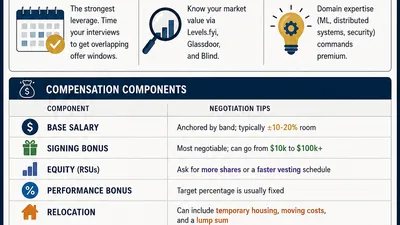
How to Negotiate Your SDE Offer: A Complete Guide
Master salary negotiation for software engineering roles. Learn how to anchor, use competing offers, and negotiate equity, signing bonus, and RSUs.
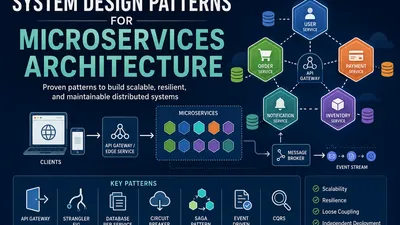
System Design Patterns for Microservices Architecture: A Complete Guide
Explore essential microservices design patterns: API Gateway, Circuit Breaker, Saga, CQRS, Event Sourcing, and Strangler Fig for scalable systems.
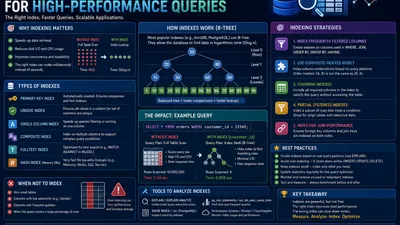
Database Indexing Strategies for High-Performance Queries
Learn B-Tree, Hash, GiST, and GIN indexes, composite index design, covering indexes, and when to use each type for optimal query performance.
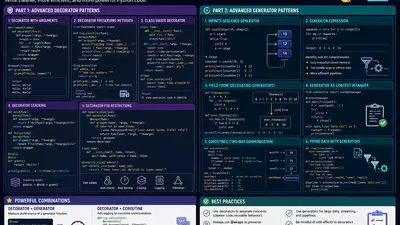
Python Decorators and Generators: Advanced Patterns
Dive deep into Python decorators with arguments, class-based decorators, and generator-based pipelines for memory-efficient data processing.
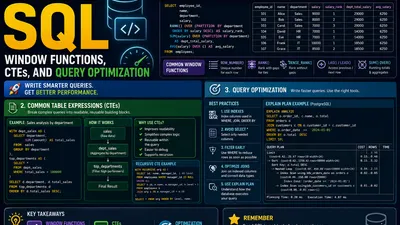
Advanced SQL: Window Functions, CTEs, and Query Optimization
Go beyond basic SELECT queries. Master ROW_NUMBER, RANK, Common Table Expressions, and query execution plans.
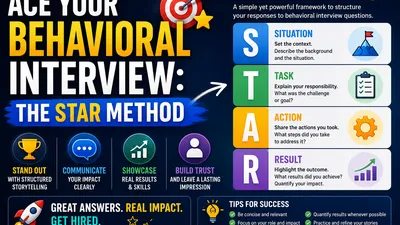
Ace Your Behavioral Interview: The STAR Method
Learn the Situation-Task-Action-Result framework and how to answer 'Tell me about yourself' and other common HR questions.
Put your knowledge to work
A good read is just the beginning.
Turn a new concept into something you can use.